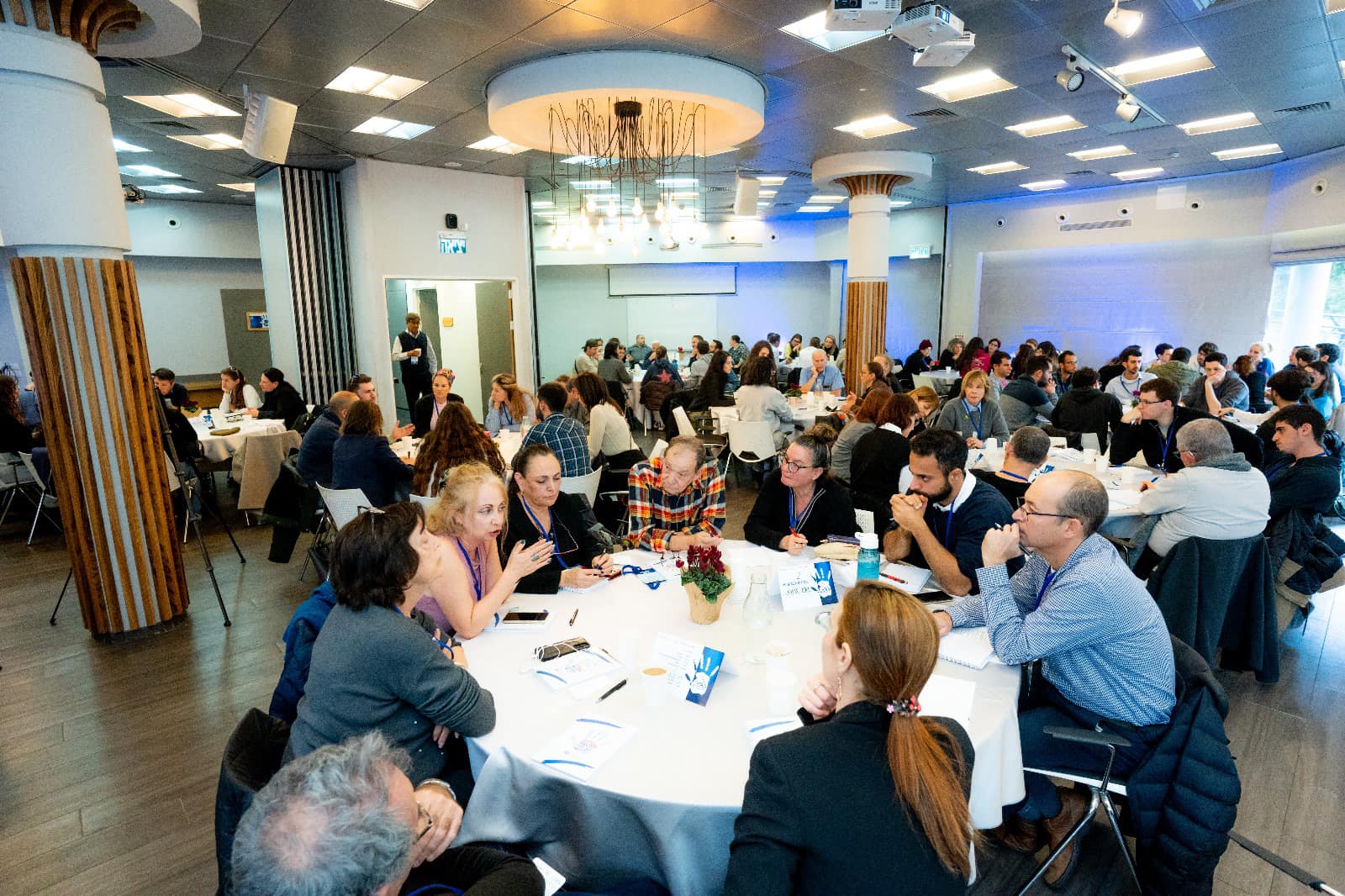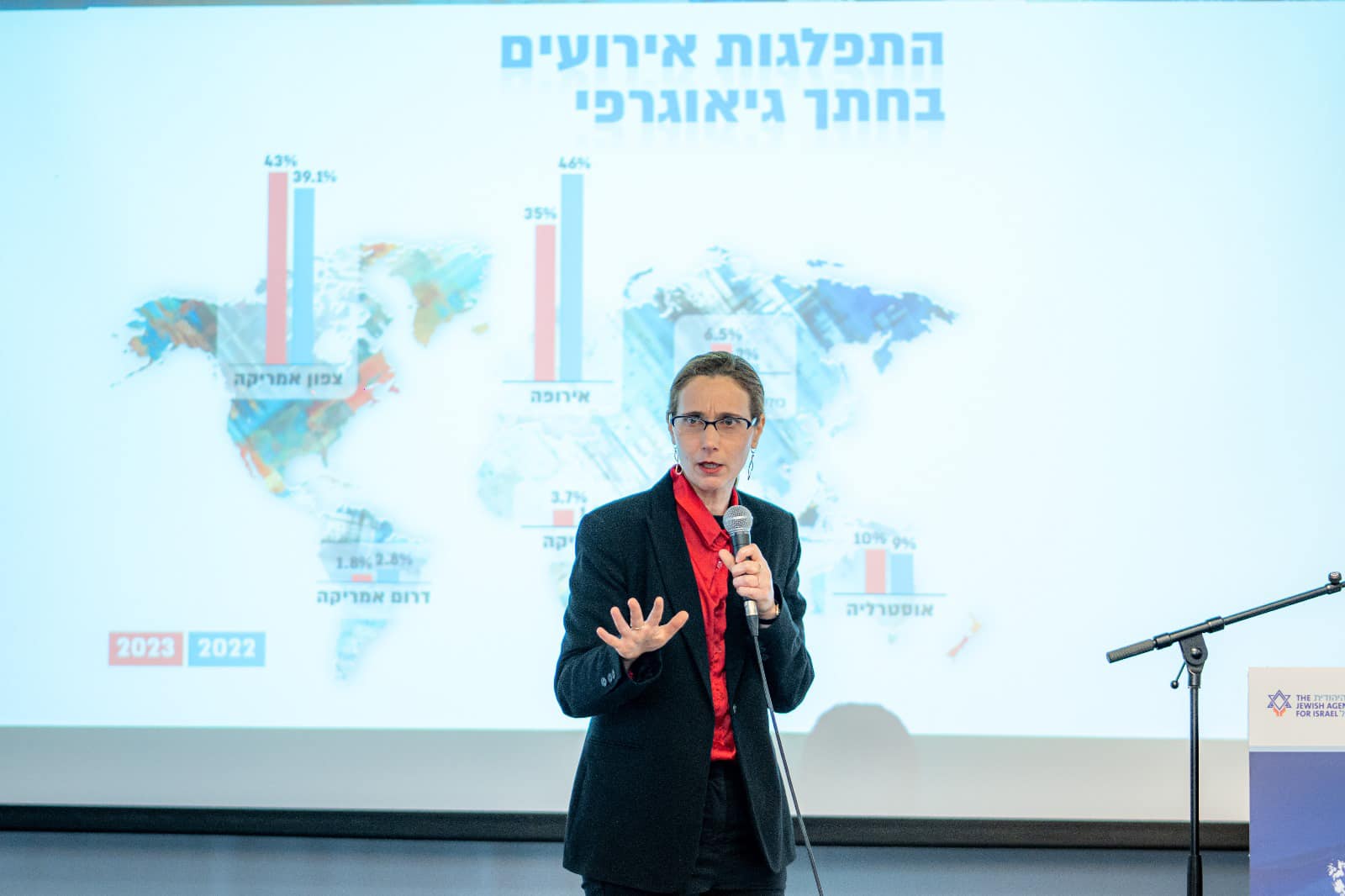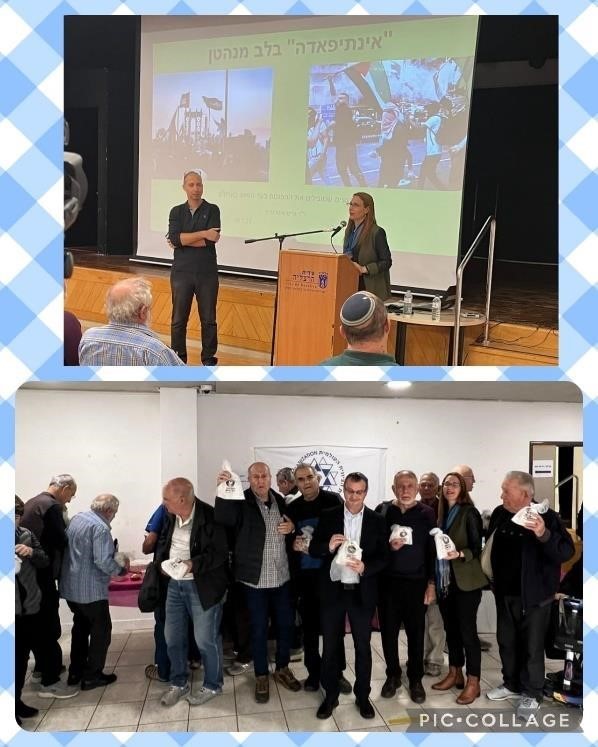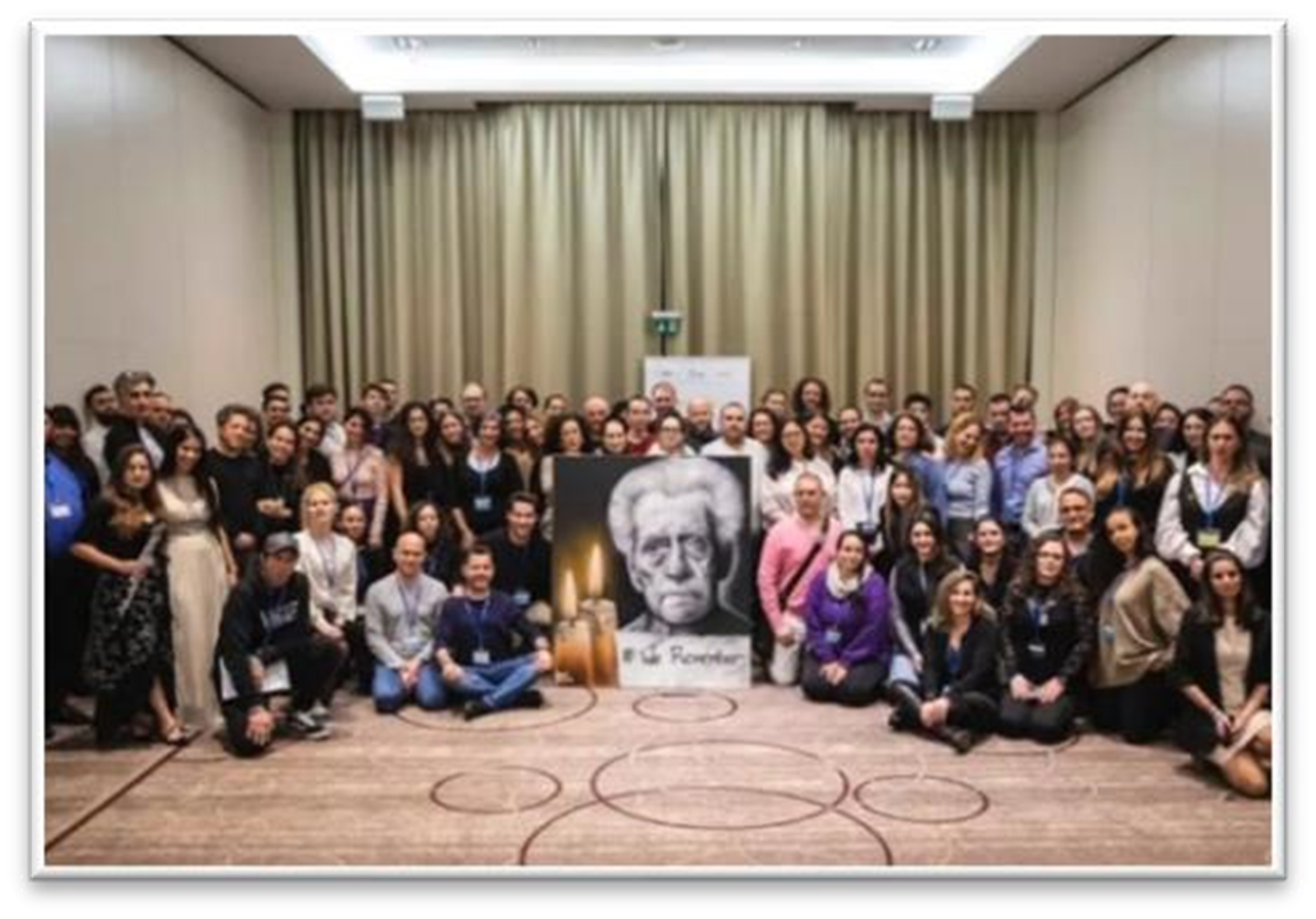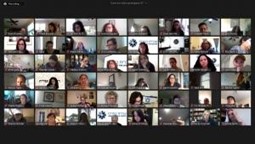



The World Zionist Organization and the Kibbutz Movement have launched a pioneering process to help restore the western Negev, at a first settlement conference, entitled: ‘Kibbutz Time is Now.’ The conference invited Israeli men and women to create the fabric of a shared future in the region’s kibbutzim. This initiative was born of the need felt by the kibbutzim themselves, and in full coordination with them, in response to the growing interest of people seeking a community lifestyle and a way to make a contribution to and within a Zionist community. The conference presented a range of options for joining kibbutzim in the western Negev region to those interested in relocation. The process of returning members and introducing new members has been planned with sensitivity and paced carefully, with the full cooperation of the kibbutzim and has been adjusted to local schedules and requirements. The conference, which attracted over 750 participants, provided a unique opportunity for people to meet up with others who share the same vision, wish to become part of the renovation of the region and make a contribution to its restoration and development. Moreover, it proved to be a unique launchpad for the drive toward national renewal as a movement: a call to move to the western Negev and restore Hope. Keynote speaker at the conference was the Head of the Department for Social Activism and Tikkun Olam, Dror Morag.
The closing event for the project to commemorate and document the black Shabbat took place at Sapir Academic College, Sderot, bringing together all the participants from the past year as well as other guests. The retreat also publicized the vast range of activity involved in researching and locating documentation post-facto, following the October 7 atrocities, with an eye toward the future. In his address, the Head of the Department for Zionist Enterprises, Silvio Joskowicz, noted the connection with Diaspora communities and the way in which commemoration enables us to rise from the dust and start afresh. The workshops at the conference focused on documentation, preserving memory, resilience and hope for the future. An exhibit, entitled ‘Heroism Under Fire’ was also on display: it is based on an educational kit comprising a collection of testimony relating accounts of immense courage, as they actually happened on October 7 and afterward.
This conference has already created its own tradition, with hundreds of young men and women over the age of 20 in the Zionist youth movements from over 30 countries worldwide gathering annually to share an extraordinary and profoundly inspiring experience. In this special space, they have opportunities to meet, exchange and address issues of substance in depth; it also allows them to work together to seek where education and leadership meet and integrate, in order to shape the future. The venue for this year’s conference was held Ofakim, which proved to be not only a meaningful choice, but a profoundly moving one. Its timing coincided with the period toward the date marking one year since the outbreak of war, on October 7. This has been a turbulent period, replete with challenges, which has necessitated grappling with tough ethical issues and complex educational dilemmas, accompanied by a disturbing escalation in the numbers of antisemitic incidents worldwide. Together, these issues have presented against the backdrop of an ongoing war, which emerged as a watershed that will go down in Israeli and Jewish history as one of the most adverse and decisive events since Israel’s inception. At a point when we are grappling with the complexities of this reality, this conference acquires far greater value because it provides us an opportunity to stop a moment, to meet, share and learn from one another, as well as to draw strength from experiences shared. Finally, the conference demonstrates the power and potential of informal education and young leadership to create change and work towards a better future for us all.
The seminar retreat was held in Israel from September 16 through 22, bringing together participants from all three cohorts, past and present – Nachshon, Szenes, and Oz. The program included a study tour of southern Israel, the central region and Jerusalem, but the trip planned to the North was cancelled due to the escalation of hostilities along Israel’s northern borders. The following are some examples of activities on their intense schedule: A meeting with K, a civilian who stepped up in civic leadership fashion by deciding, on his own, to drive to southern Israel in order to fight and save lives; a visit to Kfar Aza guided by residents of the kibbutz; planting three trees – one for each year course and a tour of the site of the Nova Festival at Re’im; preparing a barbecue for soldiers on Kibbutz Alumim; a tour of the Old City with a visit the Kotel; a visit to the Israel Foreign Ministry; a meeting with the Chairman of KKL-JNF and the Chairman of the World Zionist Organization; a tour of the National Institutions building; a visit to the Israel Knesset, and many more. At the program’s closing ceremony, the participants of the Szenes and Oz contingents presented their final projects – four by Szenes and five by Oz – and received their certificates and badges, which make them official graduates of the program. Ongoing close connections with the alumni continue even after the concluding seminar, as they engage intensely in community activities on behalf of Israel and the Jewish people – particularly, in these complicated times.
The Head of Department for Combating Antisemitism and Enhancing Resilience participated at the conference, which was also attended by members of parliament from 15 states in South and Central America as well as representatives from Spain and Israel. During the proceedings, the Head of Department raised the issue of Antisemitism on college campuses in the USA and the involvement of Arab states in establishing a pro-Palestinian narrative in academe, along with calls to boycott Israeli and American products, particularly since October 7 – as well as diplomatic involvement in efforts to negotiate the release of the Israeli hostages. The participants concluded the proceedings with a joint statement supporting Israel’s right to self-defense; they also presented several projects and draft proposals for parliamentary bills to combat hate and Antisemitism.
The symposium took place in Sofia, Bulgaria, and was attended by representatives from eight Zionist Federations. The conference was initiated by the Head of the Department for Organization and Israelis Abroad, Gusti Yehoshua Braverman. Honored guests included the Chairman of the World Zionist Organization, Yaakov Hagoel, the Secretary to the Zionist Executive, Reuben Shalom and the representative of the WZO Executive in Europe, Matan Bar Noy. The meeting’s central theme was the ‘Challenges of the Zionist Movement Post October 7’ (2023) and keynote speaker was Israel TV Channel 12’s European correspondent, Elad Simchayoff. Participants also heard an address by an (anonymous) Israeli commando who fought in the battle to contain the invasion in southern Israel on October 7 as well as serving in ongoing combat in the ‘Iron Swords’ war.
A conference of the Presidents of Zionist Federations from nine Latin American states took place in Buenos Aires from July 16-18 with a total of 40 participants, including Federation heads and their young leadership cadres. Honored guests attending the conference were the Chairman of the World Zionist Organization, Yaakov Hagoel, along with Department heads: Gil Segal, Gusti Yehoshua-Braverman, Roi Abecassis, Silvio Joskowicz, Nerya Meir and Sergio Edelstein. The Heads of Department participated in a panel session where they presented their departments’ respective activities and enhanced intra-organizational cooperation. Among the conference participants was Senator Graciela Bianchi Poli, Member of Parliament from Uruguay, the recipient of the 2023 Jerusalem Prize. The conference was opened by the Head of the Department for Organization and Israelis Abroad, who presented impressive data about the contribution made by Diaspora Jewry to Israeli civil society and the IDF since October 7 through today and thanked the Federations for their significant contribution to this effort. Together, the conference participants developed a detailed work program for the future that will leverage the Zionist Federations’ contribution to the State of Israel, which is presently undergoing one of the most challenging periods in its history.
Thousands of Jews have attended the regular annual memorial ceremonies for those murdered in the 1994 bombing. This year, the numbers marking the end of the third decade since the terrorist attack swelled to tens of thousands. The ceremony was preceded by a reception for the Presidents of Zionist Federations at the rebuilt AMIA building.
Killed at Kibbutz Hulit on October 7. Avi was the son of Sarah and Moshe, both well-known educators within the community, who brought their children up with Zionist values. His mother and three brothers attended the ceremony, representing the family. The commemorative evening was conducted by Rabbi Sergio Bergman. Excerpts from the eulogies delivered at his funeral were read aloud, and people shared their memories of Avi with those who came to pay their respects. The proceedings were accompanied throughout by a pianist and a female singer.
AMIA Joven is AMIA’s Youth Department and serves as an umbrella for youth movement alumni across all the Jewish communities. AMIA Joven organized a prequel to the main official ceremony, entitled “Remembrance also means reaching out to others,” offering a varied, hands-on activity program.
This meeting was part of the Chairman of the World Zionist Organization’s scheduled agenda for his visit to Buenos Aires. The ‘La Casa’ community was established with a view to placing Israel at the center of Jewish life and providing a home base for young Jewish adults. The community’s structure incorporates Israeli shlichim and the premises also house the Bnei Akiva youth movement. Since the outbreak of war on October 7, this community has raised funds to send large shipments of equipment for IDF soldiers and displaced families; it also continues to offer personal support for parents of lone soldiers serving in the IDF.
This conference to strengthen Jewish communities in Latin America took place in Buenos Aires, Argentina, and was attended by heads of Jewish communities from Mexico, Uruguay, Brazil, Chile, Argentina, Guatemala and other countries. The honored guests included the Minister of Diaspora Affairs and Combating Antisemitism, the Chairman of the World Zionist Organization, the Chairman of KKL-JNF, the president of AMIA, the Chair of the Zionist Federation of Argentina, the Secretary-General of AMIA and the Head of the Department for Diaspora Affairs at the World Zionist Organization as well as the heads of the various Jewish communities and local Zionist Federations. In all, the conference was attended by approximately 100 people motivated to hear the lectures and eager to gain insights, in the wake of the October 7 events. Emotions were high and it proved to be a meaningful conference, particularly as it followed close on the date of the 30th anniversary and memorial for the victims of the terrorist attack on AMIA, which killed 85 people.
The Sixth International Jewish Education Conference, a concept initiated by the Head of the Department for Zionist Enterprises and continuing under this aegis, took place this month in Argentina. The conference welcomed 1,647 educators connected with Jewish institutions in 11 different countries, some of whom work at schools located at immense distances from the center and traveled some 20 hours by bus to attend the event. The conference program was designed to shed light on focal and contemporary issues in education, with approximately 80 workshops on offer across a range of subjects and areas of concern. One example was a session focusing on how to teach about Israel after October 7 while another addressed the survivors’ stories; other sessions focused on a range of pedagogic content areas and resources, such as educational challenges in early childhood education, Hebrew language studies, and so on. The lecturers and speakers, most of whom came from Israel, with others arriving from the US, added a refreshingly new dimension through presentations that introduced different conceptual approaches and models. For their part, the speakers were also impressed by the warm welcome they received! Professional connections developed between the presenters and the educator participants; these look set to last, bringing all-round enrichment to the world of the educators and the respective communities. The conference was a joint venture, with the active participation of the local educational community, United, KKL-JNF, the Pincus Fund, and the World Zionist Organization Department of Education.
The Rubinstein Center for Constitutional Challenges held its annual conference in June on the subject of “Democracy Under Fire,” in light of the prevailing complexity of the current situation and environment, with the exponential escalation of Antisemitism worldwide, and the serious impact of hatred for Israelis on Israeli academe. The Head of Department for Combating Antisemitism and Community Resilience took part in a panel session on the subject of Hatred of Israel and Antisemitism in Academe, which was attended by hundreds of participants. Her presentation focused on the complex equilibrium between the demand to equip Israeli academics with the tools required for their personal resilience and the need to emphasize clear lines in terms of defining what constitutes Antisemitism and what represents legitimate criticism.
A Mini-Limmud Conference took place at the heart of the city of Tbilisi in June, attended by some 120 members of this special Jewish community. One of the event’s main goals was to expose participants to meaningful content in relation to Judaism, the State of Israel, the campaign to combat escalating Antisemitism, commemoration of the Shoah, and exploring their Jewish identity. The special exhibit, Antisemitism: A History Portrayed, a collaborative production of the Department for Combating Antisemitism and Limmud, was on display throughout the one-day conference.
The retreat was attended by 30 young leaders hailing from 18 communities in different countries around the world, comprising both the participants from the third intake year in this program and a number alumni from previous years who assisted with the organization of the retreat and acted as mentors to the new team. The conference agenda focused on growth, initiative, activism and change, against the backdrop of the October 7 atrocities and antisemitic incidents worldwide. During the course of the program, participants addressed a range of focal issues, and each of them presented the challenges they face in their Jewish communities. The retreat also provided them an opportunity to develop interpersonal connections and network with other participants for the benefit of their own communities and build significant partnerships for the future. The final conference for this cohort will take place in Israel in September 2024.
The Head of the Department for Combating Antisemitism spoke at the conference, and presented Antisemitism data for the period since October 7, reporting on over 10,000 antisemitic incidents document worldwide over the past eight months. A joint committee of the World Zionist Organization and JPost singled out two young people for distinction: media journalist and podcaster, Emily Austin, as a ground-breaking content creator and important role model for young Zionist leaders, and David Drayman, soloist of the successful Disturbed heavy metal band, whose cover of Simon and Garfunkel’s iconic Sound of Silence hit over one billion views. In an industry whose iconic stars have remained mute on the issue of Antisemitism, David is unique and stands out from the crowd.
Approximately 200 Jews participated in the Limmud conference held at the end of May, together with the Jewish community of Uzhhorod. This was the first conference to be held in Ukraine since the outbreak of war in the region. During the conference, a special display was exhibited on the subject Antisemitism, produced jointly with the World Zionist Organization. The conference serves as a platform for sharing knowledge and strengthening the Jewish community in the region. It was attended by the Israel Ambassador to Ukraine, as well as senior lecturers, and addressed questions raised about many issues of concern to the local Jewish community – such as the war in Ukraine, worldwide escalation of Antisemitism, and the war in Israel.
The University of Haifa’s Ruderman Program for American Jewish Studies hosted its annual symposium on the Israel-American Jewry relationship, unpacking issues of modern Antisemitism at this defining moment of time for both the US and Israel. The Chairman of the World Zionist Organization was one of the speakers invited to address to the students.
J-Street, the political home of Zionist, pro-Israel Americans and peace-supporters, held its Assembly in Washington D.C., on April 8. At the conference, the Head of Department for Social Activism and Tikkun Olam moderated a panel discussion on the subject of social activism in Israel in wartime. Panel members were Tomer Shemesh, Founding Director, Shinua Hevrati – Social Delivery; Lev Littman, Co-Executive Director, Tzedek Centers (Social Justice); and Ayelet Razin Bet Or, lawyer and expert on women’s rights and those of victims of gender-based violence and former Director General, the Authority for the Advancement of Women’s Status, currently Director of Nitzan, a Circular Philanthropic Fund for Investment in ‘Seed’ Initiatives to Promote Women and Gender Equality. The panelists presented their activities in partnership with the World Zionist Organization, addressed the social divides and challenges they are endeavoring to bridge and influence and underscored the importance of sustaining activity to advance social justice and equality.
The conference, which took place in Barcelona, Spain, was attended by approximately 80 leaders of communities and organizations from 17 countries and is the product of a partnership between the World Zionist Organization, Mosaic and the Israel Ministry for Diaspora Affairs. This is the second year running that the conference has been held. The goal of the conference was to create a peer encounter that would facilitate the development of a cross-European coalition and a framework capable of providing responses to the needs of their respective communities via regular, virtual meetings. The program included delivery of hands-on community leadership tools and a focus session where they processed these communities’ internal situations since October 7. Keynote features included panel symposia and a lecture moderated by Israel Channel 12 TV’s Europe correspondent, Elad Simhayoff, who spoke with the Head of the World Zionist Organization Department for Irgoon and Connections with Israelis abroad, Ms. Gusti Yehoshua-Braverman, and the Deputy Director of the Israel Ministry for Diaspora Affairs, Mr. Yom Tov Raanan. A special Israeli Kabbalat Shabbat service was also held and two post-October 7 research studies were presented on the urgent needs of communities and their general ambiance. These encounters were followed by round table sessions, allowing participants to engage on issues currently impacting on the future of their communities in the wake of October 7. The program finale included a musical program with Michal Gringlik, sister of Captain Shaul Gringlik z”l, who auditioned successfully for Israel’s “Rising Star” reality TV program, before he fell in battle in the Gaza Strip.
The international BBYO youth movement marked its centenary this month at its annual international convention in Orlando, Florida – a century of activity and growth. The event was attended by over 5,000 teenagers and alumni from 60 different countries. Silvio Joskowicz, Head of the Department for Zionist Enterprises, was among the guest speakers. The range of encounters enabled participants to engage in an in-depth, frank dialogue about the challenges confronting the world in which we live, while also serving as a space for mutual support and allowing them to build inter-personal connections. Other keynote participants were Dan Tessler, a survivor of the Nova Music Festival and Yaheli Yakubovitz from Kibbutz Zikim, who was involved in combat from October 7: both gave personal accounts as part of the “First Testimony – In Their Own Words” project.
Representatives of the World Zionist Organization Department for Zionist Enterprises participated at the professional conference for 170 JCC directors from across North America, where participants engaged on the challenge of being Jewish in today’s free world. One of the program high points was the performance and encounter with the members of the Shufuni Band, which was formed by four musicians from Sderot, Beeri and Miflasim in the wake of October 7. The quartet relate personal accounts but mostly sing about their experiences. The band also made another seven appearances in Baltimore and Denver, reaching a total audience of over 3,000. This tour was also part of the “First Testimony – In Their Own Words” project, in cooperation with the JCCA and the Ministry for Diaspora Affairs’ partnership in the ‘Mithabrim’ project.
Over 150 shlichim traveled from across the US and Canada for the conference. One of the guest speakers was Sarit Zussman, whose son Ben fell in battle in the Gaza Strip; there was also a performance by singer-songwriter Ariel Horowitz.
The conference, attended by renowned experts in the fields of Islam, terrorism and Antisemitism was held at a venue in Herzliya.
Racheli Baratz Rix presented World Zionist Organization activity programs related to combating Antisemitism, and reviewed levels of Antisemitism worldwide, with a particular emphasis on Antisemitism on campus around the USA as well as the new challenges arising from the upsurge in Antisemitism in general.
The day concluded with an event to “Operation Dugo,” when all the participants were invited to eat falafel in remembrance of Shoah survivor David (Dugo) Leitner z”l, who marked the day by eating falafel to symbolize the victory of life.
The Head of the Department for Combating Antisemitism and Enhancing Resilience addressed Naamat Women in the Toronto region about Antisemitism around the world today, in light of the 800% increase in the number of antisemitic incidents in Canada, by comparison with the same period last year.
Last weekend, the Department for Combating Antisemitism and Enhancing Resilience participated in the proceedings of the three-day Berlin conference, organized by the ICE.
The conference goal was to attract young Israelis to learn about technical innovations and new initiatives, while gaining insights into combating Antisemitism in European communities. Dozens of young Israelis registered from all over Europe and attended, to be able to acquire tools to combat escalating Antisemitism, which have reached unprecedented levels across the continent.
At the conference, the Head of the Department for Combating Antisemitism and Enhancing Resilience presented the dimensions of Antisemitism around the world and addressed its escalation by thousands of percent since October 7.
An online virtual conference was organized by the World Zionist Organization for hundreds of teachers and leaders in service in educational institutions throughout North America.
The conference aimed to promote and reinforce the profession of Hebrew language study in North America and build a learning community for education professionals engaged in this field and their partners, across all the age groups.
The program included a session dedicated to a presentation about Antisemitism today by the Head of the Department for Combating Antisemitism and Enhancing Resilience, with a survey of current data. The session also provided relevant tools and information with potential to render messages about October 7 and other issues accessible to children and school-age students.
The conference was attended by dozens of male and female participants.
On January 31, the emergency conference on combating Antisemitism convened, bringing together hundreds of participants from across Israel, including youth movement alumni, educators, renowned senior figures in the field from around the world, and others.
The conference was attended in person by the Chairman of the World Zionist Organization and other members of the Zionist Executive.
The Head of the Department for Combating Antisemitism and Enhancing Resilience presented research data on current levels and the scope of Antisemitism, together with trends extrapolated for 2023, and addressed current challenges presenting at the outset of 2024.
The conference included round table sessions moderated by senior figures from social action organizations, addressing social action initiatives in relation to combating Antisemitism.