


“Artificial intelligence is powerful - very powerful - at many of the things education systems have valued for generations: delivering information, correcting exercises, explaining a process step by step. But it is weak, and will remain so, at the the things that make a great educator unforgettable: shaping a student’s judgment, building relationships of trust, and modelling values through personal example.” With these words, Silvio Joskowicz, Head of the Department for Zionist Enterprises, opened the Eighth Jewish Education Conference in Argentina.
For the eighth consecutive year, the Department for Zionist Enterprises joined the Jewish community in Argentina and other partners in leading the conference. Under this year’s theme, “Technology and Humanity: An In-Depth Dialogue to Advance Education,” more than 1,900 educators came together for three days of learning, conversation, and reflection on some of the key challenges facing education in an age of rapid technological change - including how the role of the educator is being reshaped.
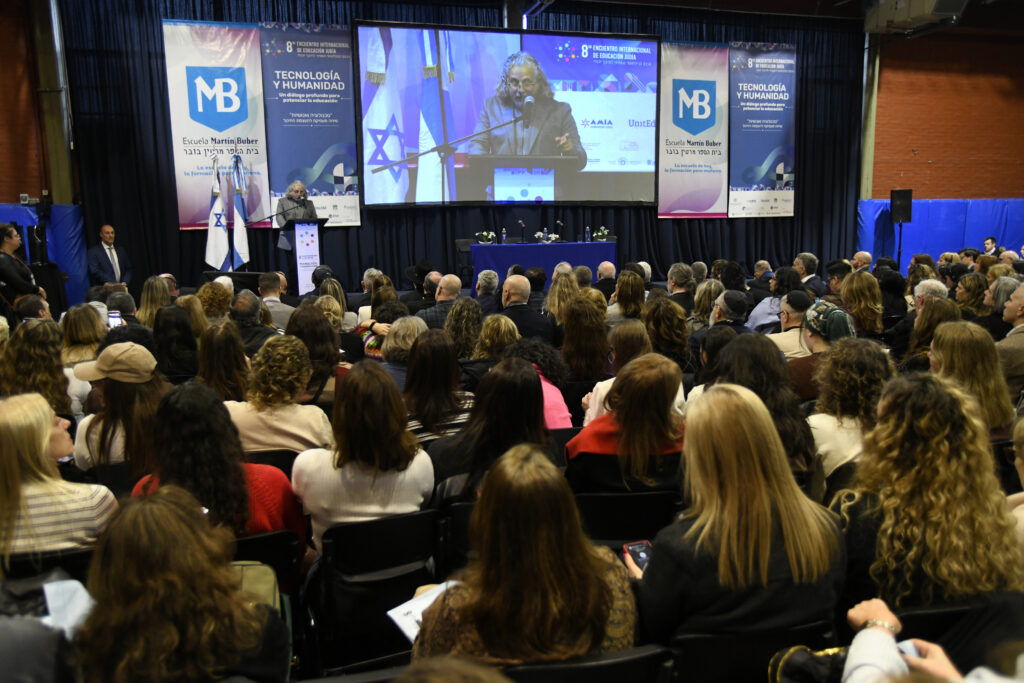
The program included sessions, lectures, and activities led by 22 prominent experts from Argentina, France, Spain, Israel, and the United States, who shared their knowledge, perspectives, and experience. “There is something I want to say with absolute clarity: if content can be learned independently - through a video, with immediate feedback, at any time of day - then what makes a school distinctive can no longer be the information it delivers. It becomes something else: the community it builds, the rituals it shares, the sense of belonging it creates. And in Jewish-Zionist education, this is neither new nor an afterthought. It has always been at the heart of what we do,” Silvio continued.
He concluded: “I come from Israel, which, as you know, is now one of the countries with the highest levels of AI use in the world. And I have to say that my commitment to what is human, real, and personal remains as strong as ever. In Israel, I see young leaders committed to making the world better, seeking democratic ways to include everyone and create a better future. They are the product of a humanistic education that places the very best of what we have - human beings - at its center. Their teachers have played a central role in giving them the ability to dream and, today, to turn those dreams into reality.”